

Internet-Delivered Cognitive Behavioural Therapy (ICBT) is an evidence-based psychotherapy that delivers cognitive behavioural therapy securely online. It helps people learn practical skills to manage symptoms of anxiety, depression, stress, sleep difficulties, and other common concerns, such as alcohol misuse.
ICBT is designed to provide the same core components as face-to-face CBT, while reducing barriers to care such as long wait times, geographic distance, scheduling challenges, and stigma associated with seeking care.
ICBT courses typically include:
Most courses are designed to be completed in 8 weeks, although clients typically retain access to the course for at least 4 weeks.
Yes. A large body of research shows that therapist-guided ICBT produces outcomes comparable to face-to-face CBT for diverse mental health conditions and is often more convenient and accessible.
Research led by the Online Therapy Unit (OTU) demonstrates that clients experience meaningful reductions in symptoms, improved functioning, and high satisfaction with care.
Therapist guidance is preferred by many clients and contributes to outcomes. Courses that include regular therapist support tend to show stronger outcomes than fully self-guided programs, especially when symptoms are more significant.
Yes. Saskatchewan is an international leader in ICBT research and implementation. The OTU collaborates with other major centres, such as MindSpot Clinic (Australia), and its work aligns with models used in publicly funded services in countries such as the United Kingdom and Sweden.
The OTU research has been published in leading peer-reviewed journals and has informed national and international mental health policy and practice.
View our PublicationsICBT works best for adults who want flexible, private, skills-based support.
ICBT is a great fit if you:
ICBT may not be the best fit for individuals who:
The OTU conducts initial screening to help determine whether ICBT is a suitable option and provides referrals when additional support is needed.
If you’re unsure which course is right for you, visit the Help Me Decide page to learn more or begin a quick screening.
We typically recommend that if you are seeing a mental health professional, you do not also use Online Therapy.
There may be exceptions, such as when:
In these cases, Online Therapy can complement your existing treatment. If you are unsure, we encourage you to discuss this with your healthcare provider before applying.
Participating in an OTU course involves three simple steps to help determine whether ICBT is a good fit for your needs:
Read through the descriptions of the online therapy course currently being offered by the Unit. While all courses are based on similar skills, each is tailored to specific concerns or populations.
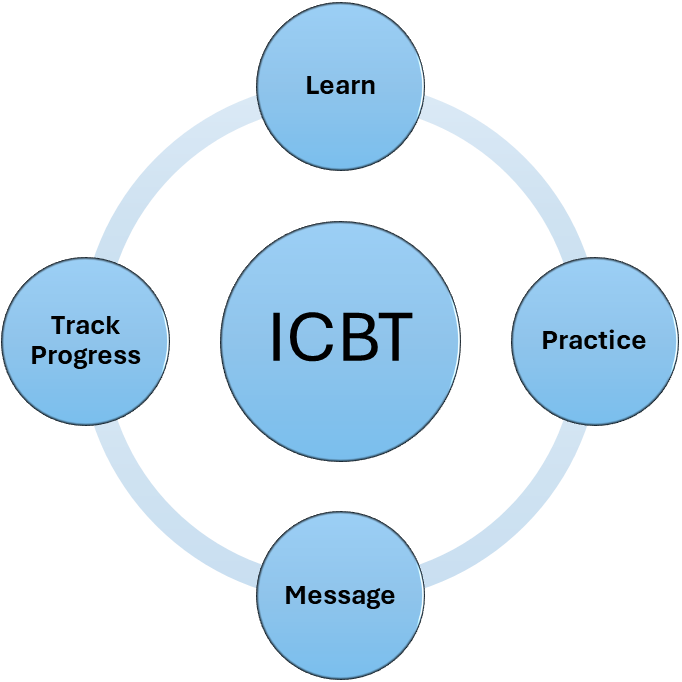
Most courses run for 8–10 weeks. You’ll learn new skills each week, practice between lessons, and message your therapist through our secure messaging system.
At the Online Therapy Unit, we are dedicated to supporting people in managing a variety of symptoms related to their mental health and health conditions.
Because we are a small team, your participation and commitment play a key role in the success of your therapy.
Before applying, please ensure that you are prepared to accept the following responsibilities:
By following these steps, you’ll get the most out of your experience and help us provide the highest-quality care possible.
💡 Tip: Setting aside dedicated time each week for your lessons and practice helps you stay on track and see better results
Participating in an Online Therapy course requires perseverance, determination, courage and consistent effort, but it can lead to lasting improvement. Each course is designed to help you learn, practice, and apply new strategies in daily life.
You can expect to:
💡 Success in online therapy depends on active engagement. The more you practice, the more confident you’ll become in managing your symptoms.
The contact you will have with a therapist during your online course varies by course. The Online Therapy Unit provides support in a few different ways:
Weekly check-ins and personalized feedback. When you take a therapist-assisted course with the Online Therapy Unit you will be assigned a therapist who will check in with you on a weekly basis during the course. The therapist assigned to you may be a mental health care provider working for the health region, a therapist working for the unit, or a graduate student working under the supervision of a registered mental health care provider.
Each week your therapist will check in with you through secure online messaging on our website and will answer any questions or concerns you have sent to them over the week. Sometimes, therapists will call clients in addition to messaging them if this is felt to be clinically helpful. In a therapist-assisted course, therapists are trained to offer therapeutic support to clients as they work through the material. The therapist will typically offer support and encouragement, as well as assist clients in understanding and applying techniques introduced in the course.
Contact with therapists can be shorter or longer depending on the client concern and averages 20 minutes per week. If you would like to know if the course you are interested in is therapist-assisted, please refer to the course description page for more information.
Encouragement and brief check-ins. In a guided course, guides set aside approximately 10 minutes each week to answer basic questions about the course content, and encourage clients to continue with their work on the course.
Contact with guides in a guided course is typically briefer than in a therapist-assisted course but on occasion will be longer if there is a significant clinical issue. Clients can contact their guide through the secure message system, and their guide will respond at least once a week either by secure messaging or a brief phone call.
Research shows that this guidance can be very helpful and many clients do very well with this level of support. If you would like to know if the course you are interested in is guide-assisted please refer to the course description page for more information.
Independent learning, with periodic monitoring for support. In a self-guided course, clients work independently on course materials and are notified by external email when lesson materials become available.
Clients can message technical support directly through the website should any technical or website issues arise. During their course clients do not have scheduled contact with a therapist or guide. However, client files are monitored each week by Online Therapy Unit clinicians for significant changes in wellbeing or sudden increases in symptoms. If concerns arise, an Online Therapy Unit clinician will reach out to the client for brief support and make service recommendations. If you would like to know if the course you are interested in is self-guided, please refer to the course description page for more information.
| Type of course | Level of support |
|---|---|
| Therapist-Assisted | Weekly check-ins via messages approximately 20 minutes |
| Guided | Brief check-ins approximately 10 minutes |
| Self-Guided | Independent learning |
Many ICBT courses, including those offered by the OTU, provide therapist support primarily through written messages.
This approach allows:
Research shows that written therapist guidance can be highly effective and is often preferred by clients for its clarity and convenience.
We encourage participants to start their course when they can engage consistently each week. Since OTU courses are time-limited, consistency is important for success.
If you have a planned vacation or need to step away after starting the course:
Unexpected things happen—we’ll work with you to help you stay on track while getting the most out of your course.
While we hope participants complete the full course, we understand Online Therapy may not be the right fit for everyone.
If you decide to discontinue your participation:
Your participation and feedback help us continue to refine our services to better meet client needs.
Yes. The Online Therapy Unit website provides a safe and secure environment for clients and therapists to communicate and access therapy lessons.
We take information security very seriously. All data is:
This ensures your privacy, confidentiality, and safety throughout the course.
🔒 Your information is always protected and never shared outside your care team without your consent.